Saturday, 1 June 2013

Managing Marketing Content Across the Customer Lifecycle


Considering our purpose as marketers, we should be placing customers at the center of our marketing efforts. That's truer today than ever before, because customers have more choices, more control, more ways to connect, and more access information.
No wonder marketers everywhere are scrambling to develop content and make use of the myriad of channels to reach and connect with prospects and customers.
Many marketers have gotten so caught up in the creation of content, however, that they have forgotten how important it is to match marketing content with the customer buying journey and lifecycle. Content delivered in the right channel at the wrong time can be a wasted touchpoint.
Too few marketers have mapped their customer's buying journey and moved from profiles to personas, and therefore few clearly understand their customer's lifecycle.
Because keeping a customer is more cost effective and profitable than acquire a new customer, knowing both the buying journey and the customer lifecycle is important.

Click Here!
The Customer Lifecycle
One common definition of customer lifecycle is "the progression of steps a customer goes through when considering, purchasing, using, and maintaining loyalty to a product or service." The key point is to recognize that the lifecycle defines an ongoing relationship and continuous dialogue.
Forrester defines the customer lifecycle as follows: "The customers' relationship with a brand as they continue to discover new options, explore their needs, make purchases, and engage with the product experience and their peers." In our company, we talk about the Six Cs associated with this process:
  1. Contact
  2. Connection
  3. Conversation
  4. Consideration
  5. Consumption
  6. Community
Whether you use this approach or another, the premise of the customer lifecycle is the same: Capture potential and existing customers' attention, preference, purchase, and loyalty.
As marketers, we can and should use the customer lifecycle as the basis for every marketing investment decision we make that's designed to acquire, retain, upsell, cross-sell, and create customer advocates. Only by understanding the customer lifecycle can marketers make better decisions about the additional marketing investments of time, people, and cash on customer-targeted efforts.
Content and Lifecycle
The purpose of content marketing is to deliver high-quality, relevant, and valuable information to prospects and customers in the right channel at the right time to drive profitable customer action.
Content marketing is not the same as running a campaign. Content marketing looks more like publishing, where you serve as the architect of useful and compelling information that will inform, educate, engage, and entertain customers and prospects. Content marketing is part of the marketing mix, not a substitute for it.
If you serve more than one market or region, and your product requires a consultative approach, you will likely have multiple customers and will therefore need to map content to multiple buying journeys and lifecycles.
Perhaps the following examples will help bring this point home.
Let's say you currently market and sell a technology product to IT buyers and decision-makers in the federal government. Your research suggests that there may be a strong growth opportunity in the Emergency 911 system—a quasi-governmental system. If you didn't map the customer buying journey, you might assume that the buying process for the Emergency System was the same as for any other government agency. And you might also assume that the profile of the IT buyer at these sites would be the same as the IT buyer at the agency. Only by mapping the buying process would you learn that these are two very different personas and two different buying processes with different marketing content implications. Whitepapers and tradeshows may be far more important in the early stages of the government-agency buying process, whereas webinars and videos of the system in use are more important in the early stages of the buying process for the emergency services sites.
How can we record this process when most customer buying journeys and lifecycles are not linear? Though it is impossible to completely capture and monitor the entire buying journey and decision, mapping the process helps you capture channel preferences and interactions. You may not be able to know exactly which colleague, analyst, online and offline channels a customer used, or which publication informed the decision, but mapping the buying journey and customer lifecycle will give you insight into when and how they are influenced.
Mapping the Journey and Lifecycle
The approaches to mapping differ. Regardless of the approach you take, you should include input from all internal people who are in contact with customers (Sales, Marketing, Customer Service, Product Marketing) as well as input from the customers themselves. The mapping process should take into account the following:
  • Initial triggers that lead to first contact
  • Steps they take (industry reports, product reports and reviews, whitepapers, demos, etc.) and the conversations (analysts, colleagues, event encounters, call centers, salespeople, etc.) they engage in to solve their problem and find a specific solution
  • Steps and experiences leading up to their purchase (the RFP, reference calls, pilots, etc.)
  • Steps associated with the purchase and consumption (the onboarding process, purchasing processes, implementation, invoicing, etc.)
  • Ongoing experience and reaction to their purchase (problem resolution process, new product offers, community participation opportunities, etc.)
Once you've mapped the process and organized each step into the appropriate stage, you can begin to match marketing content with the buying process and lifecycle.
Two important benefits of the mapping initiative are improved Marketing and Sales alignment and a more behaviorally based opportunity-qualification process.
Matching Mix, Content, Channel, and Lifecycle
The links between marketing activities, content, and the customer buying process and lifecycle will become clearer once you complete the mapping process. You'll realize that different programs and content will be more valuable and appropriate at different stages depending on the customer process.
The map will serve as a guideline for improving the utility of your mix and the content you use to connect and engage with customers and prospects, as well as to enhance existing customer relationships.
For example, you may learn from the mapping process that traditional in-person events and presentations are far more valuable at creating contacts and connections for a specific segment than social media and blogs are. Your map may reveal that webinars with industry experts are a viable touchpoint for consideration for some customer segments while online chats with existing customers and traditional telemarketing are more effective for other segments. Through the process, you may learn that traditional e-newsletters are ideal for staying connected with one set of customers, whereas an online community with guest posts is better for another.
Marketing will then need to select the program and build the content that supports the preferred channel for particular touchpoints in the process.

Generations Online in 2010


There are still notable differences by generation in online activities, but the dominance of the Millennial generation that we documented in our first “Generations” report in 2009 has slipped in many activities.

Click for a larger version
Milliennials, those ages 18-33, remain more likely to access the internet wirelessly with a laptop or mobile phone. In addition, they still clearly surpass their elders online when it comes to:
  • Use of social networking sites
  • Use of instant messaging
  • Using online classifieds
  • Listening to music
  • Playing online games
  • Reading blogs
  • Participating in virtual worlds
However, internet users in Gen X (those ages 34-45) and older cohorts are more likely than Millennials to engage in several online activities, including visiting government websites and getting financial information online.
Finally, the biggest online trend: While the youngest and oldest cohorts may differ, certain key internet activities are becoming more uniformly popular across all age groups. These include:
  • Email
  • Search engine use
  • Seeking health information
  • Getting news
  • Buying products
  • Making travel reservations or purchases
  • Doing online banking
  • Looking for religious information
  • Rating products, services, or people
  • Making online charitable donations
  • Downloading podcasts
Even in areas that are still dominated by Millennials, older generations are making notable gains. Some of the areas that have seen the fastest rate of growth in recent years include older adults’ participation in communication and entertainment activities online, especially in using social network sites such as Facebook. Among the major trends in online activities:
  • While the youngest generations are still significantly more likely to use social network sites, the fastest growth has come from internet users 74 and older: social network site usage for this oldest cohort has quadrupled since 2008, from 4% to 16%.
  • The percentage of all adult internet users who watch video online jumped 14 points in the past two years, from 52% in May 2008 to 66% in May 2010.
  • 51% of all online adults listen to music online, compared with 34% the last time this question was asked, in June 2004. While Millennials used to be by far the most avid listeners, Gen Xers and Younger Boomers are catching up.
  • As of May 2010, 53% of online adults have used a classified ads website such as Craigstlist, up from 32% in September 2007.
Additionally, searching for health information, an activity that was once the primary domain of older adults, is now the third most popular online activity for all internet users 18 and older.
Few of the activities covered in this report have decreased in popularity for any age group, with the notable exception of blogging. Only half as many online teens work on their own blog as did in 2006, and Millennial generation adults ages 18-33 have also seen a modest decline—a development that may be related to the quickly-growing popularity of social network sites. At the same time, however, blogging’s popularity increased among most older generations, and as a result the rate of blogging for all online adults rose slightly overall from 11% in late 2008 to 14% in 2010. Yet while the act formally known as blogging seems to have peaked, internet users are doing blog-like things in other online spaces as they post updates about their lives, musings about the world, jokes, and links on social networking sites and micro-blogging sites such as Twitter.

Activity grid

Friday, 31 May 2013

Learn from the World’s leading experts on Customer Experience

Are you one of the growing number of Customer Experience professionals? Have you been given the task of ‘improving your Customer experience’? What do you do? What are the problems and pitfalls? Do you want recognition that shows you have been professionally trained and carries weight with employers? Are you looking for career progression and development? Who better to help you than the world’s experts on the Customer Experience?

Here are 5 reasons why the CEM certification program could be a practical solution for your current needs:

1. When an organization is looking to focus on the Customer Experience it is important to set the standard at the start. Train on the concepts of the Customer Experience and set the direction!
2. Due to the nature of business today, face to face training is impractical from a time and cost perspective. Beyond Philosophy offers remote learning in the form of a live, in person webinar solution, conducted by recognized world leading experts in Customer Experience .
3. Our live webinars are reinforced with tasks, homework, self-assessments and set reading designed to reinforce the learning. If you miss a live event you can listen to a recording of this at your leisure. This is not only practical & productive but you can set your own pace.
4. You will meet and network with other Customer Experience professionals from around the globe, during every live webinar and study group, to get a view of what other companies are doing. This gives you the ability to share one another’s problems and challenges you may be facing, understanding you are not alone in your current situation.
5. And finally, not only obtaining official recognition for your expertise upon completion of the Customer Experience Management Certification (CEM) program; but gaining the knowledge to make a significant difference to your organization’s Customer Experience strategy and into a competitive advantage.

Why learn with Beyond Philosophy?

It’s simple, Beyond Philosophy have helped shape the whole Customer Experience industry. We are literally one of the first companies in the world to focus solely on Customer Experience. From our first book in 2002, Building Great Customer Experiences and our subsequent three further books our concepts and CEM training methodology have worked for many organizations. (case studies link) to prove this.
We have many models, templates and self assessments that enable organizations to improve their Customer Experience and those wanting to participate in the Customer Experience Management Certification (CEM) program will be fortunate enough to use & put these theories into practice during the course. We will also reveal to you a number of secrets that we do not publicize worldwide. This is the reason why the CEM program is targeted at ‘client side’ professionals and consultants are not permitted to attend.

Tuesday, 28 May 2013


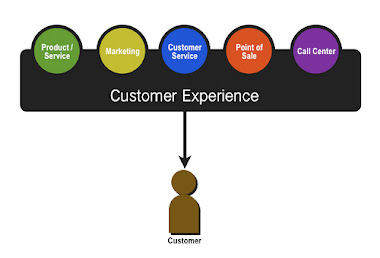
Customer Experience is a term that, like its predecessor ‘Customer Relationship Management (CRM)’, is being sufficiently discussed, debated and talked about. Here I would attempt to summarise the vast literature around it in meaningful way, which even a layman can understand while making the best of efforts to ensure sufficient academic stimulation for the well-informed of the field.
1. Customer Touch points
First, let’s look at what is a customer touch-point. A customer touch-point is defined as a point of interaction between the customer and the business that is selling the product/service which the customer requires. This customer-business interaction may happen over any of the channels of communication
2. Customer Experience Channels
There are multiple channels to facilitate interaction between a customer and a business. These could be classified as direct channels (like the call centre) or indirect (like TV advertising). Based on the use of technology, these channels could also be classified asDigital Channels (like Website, mobile phone) and Physical Channels (like retail store). There may also be social channels of customer experience. These are indirect channels typically where a potential customer hears about a product/service experience of a business from his/her friend. These are typically social channels, traditionally limited to word-of-mouth marketing (WOMM) but more recently including new age Digital channels like Facebook, Twitter, etc.
3. Customer Lifecycle & Stages
Customer Lifecycle is the sum-total of all the stages that a customer goes through during his/her interaction with a business from awareness, discovery, attraction, interaction, purchase, use, cultivation to advocacy/termination.Customer LifecycleCustomer Lifecycle
4. Customer Journey
Each stage of the customer lifecycle above has a customer objective and the customer goes through a series of steps to achieve his/her objective. This is known as a customer journey. And Customer Journey Mapping has its promoters and detractors and the benefits have to be weighed in by the business before undertaking it.
Customer Journey Map - Life Insurance CustomerCustomer Journey Map - Life Insurance Customer
5. Customer Experience Definition
With those basic components defined, I believe we are at a point where we can define Customer Experience. Customer Experience is a cumulative total of what a customer feels (experiences) across all touch-points, across all stages of the customer lifecycle, across all customer experience channels.
6. Customer Experience Classification
Several sub-sets of customer experience have been attempted. From online experience to User Experience to Digital Customer Experience, there are many attempts to classify/slice-and-dice customer experience subsets. But most are in its infancy and industry specific.
7. Differentiation from Customer Relationship and other previous concepts
Customer Relationship Management (CRM), Word-of-mouth-marketing (WOMM), Customer Service, Voice of Customer (VOC) initiatives and Net Promoter Score (NPS) are all concepts related to customer experience. Each of them deserves its own discussion but broadly speaking they all represent a segment/subset of customer experience but not customer experience in its entirety. E.g. WOMM & NPS mainly reflect the outcome of customer experience but do not measure its enablers.CX, CRM & Loyalty ManagementCX, CRM & Loyalty Management
8. Challenges of Customer Experience (CX)
Lastly I want to briefly touch upon the current challenges of customer experience. So assuming you comprehend CX, its value to your business but the obvious next question is how? The primary obstacles in enforcing a proper CX strategy in an organisation are as follows, in my opinion:
a. Tools for Customer Experience – There are very few IT tools available for CX namely along the following objectives:
i. Customer Experience Innovation – How do I use technology to innovate CX of my business? Are there existing tools that I can implement and let them suggest innovative solutions to my CX challenges?
ii. Customer Experience Delivery – If I have a CX strategy in place, what IT tools should I procure to implement them in my existing IT ecosystem?
b. Customer Experience Monetization – What CX strategy should I implement so that I get the maximum bang for my buck? I have attempted to address the challenge of “Customer Experience Monetization” for hotels industry in one of my earlier posts.
c. Customer Experience Measurement – How do I as a business quantify “experience” and then measure it? Should I measure it using financial metrics like revenue or service metrics like FCR (First Call Resolution) or survey based metrics like CSAT (Customer Satisfaction) or social metrics like NPS.
I hope the definitions and the challenges articulated would serve to give a foundation to those looking to learn about “What exactly is customer experience?” For experts in the field, I welcome them to contribute about what are the other major challenges that I might have missed out as well as proposing their solutions to the challenges I have elaborated above. I look forward to learning from my peers and seniors in the field…

Monday, 27 May 2013

Gen Y on Social Now


Gen Y- Ambitious to Save the World as Social Entrepreneurs

IEDP: The involvement of ‘millennials’ in social entrepreneurship highlights how the corporate world can benefit from engaging a generation ambitious to change the world. Experts Giles Hutchins and Martina Mangelsdorf have been looking into this new trend towards social entrepreneurship and identified five values in Gen Y which act as catalysts for the desire to better the world.

  • Share on TwitterShare on FacebookShare on Google+Share on LinkedInEmail a friend
Students from Dutch art schools De Eindhovense and SintLucas, each chewed on a piece of gum before adding it to this structure, made entirely of chewing gum, May 2012 (Photo: Rex).
While a business entrepreneur typically measures performance in profit, a social entrepreneur also measures positive returns to society and the wider environment.
(PRWEB UK) 26 March 2013
A lot has been said and written lately about the rise ofsocial entrepreneurship. Not only does the world suffer from an increasing number of challenges that need solutions, it also seems that more and more people feel drawn to a career as a social entrepreneur.
While a business entrepreneur typically measures performance in profit, a social entrepreneur also measures positive returns to society and the wider environment. Social entrepreneurship is commonly associated with the voluntary and not-for-profit sectors but it does not necessarily exclude for-profit business objectives. Common initiatives include community interest activities, social engagement and education, micro credits, cooperative farming, business development, supporting arts or vocational training.
Born between 1980 and 1995, many from themillennial generation have embraced social entrepreneurship as a valid and desirable career track – seeing it less as a ‘career’ in the traditional sense and more as a purposeful path in life. Several colleges and universities have established programs that focus on educating social entrepreneurs and FORBES recently published their annual “30 under 30” listing of innovators and entrepreneurs for 2012. Social entrepreneurs were added as one of six new categories this year, ranging across 15 fields from Art & Style to Technology.
Similar to the young disruptors selected by FORBES, countless Gen Y talents are impatient to change the world and social entrepreneurship offers them a great outlet to do so. It simply resonates with some of the typical Gen Y values that characterize this generation: collaboration; accessibility; sustainability; globalization; self-expression.

CE Steps 2

  1. When we hold resentment in our hearts, we deliver far below our capabilities.  Learn objective caring to prevent taking customers’ criticisms personally.  When front line teams deliver negative customer feedback to the rest of the company, does everyone in your organization respond with an open mind?
  2. Our future is behind every customer. The customer is the heart of business success. It beats for our future. Maintain heart health!
  3. Trusting the customers, not mistrusting them, is the starting point. Customers expect you to trust them and they remember this as a super customer  experience. Mistrusting them will never lead to loyalty or great reviews. Have you unknowingly built your core beliefs around protecting your company from “untrustworthy” customers?
  4. Scaling challenges don’t impress customers. Customers don’t make allowances for bad service even if companies are large. Customers expect large companies to use the power of technology to address the challenges of scaling and still provide super customer experience.
  5. Care and adapt. Customers reject rigid rules. Super customer experience is about understanding what the customer wantsand how they want it delivered.
  6. Touch my heart before you touch my money. Customers take a risk when they choose a company for products or services. They have at least 20 burdens of uncertainty they hope you will eliminate for them before you take their money.  Understand and address these uncertainties and you are on the road to delivering super customer experience.
  7. The customer’s pulse is our vital sign too.  Every aspect of customer experience gives a business the customer’s vital signs. Shut out the vitals and we risk killing that customer relationship.

CE Steps 1


Customers always remember a super customer service experience. Kate Nasser, The People-Skills Coach ™, shares 15 essential beliefs for your support team to remember:
  1. Customers cannot observe your intentions. Treat them well in every aspect of interaction and experience.
  2. The customer’s voice echoes forever. Of course they talk about you. What they say is actually up to you.
  3. Persist when you sense potential; shift and innovate when you see futility. Never let frustration with a customer stop you from finding a solution and delivering super customer experience!
  4. Make customer service experience easy! Count the number of hoops you ask customers to jump through & you’ll find the places they may jump ship! Leave the hoops for basketball.
  5. Courtesy and civility do not undo your message. They allow the customers to hear it.
  6. A customer’s trust is an invitation for a human bond. Your actions RSVP the truth about you and your beliefs and foretell the customer’s next choice.
  7. There is a difference between service and servitude. The first you choose; the second you don’t. Customers believe this applies to whole companies not just to the individual reps with whom they speak.  Do your customers see your company living an enthusiastic service mindset or begrudgingly working in servitude?
  8. A sincere apology is the quickest way to repave the road of customer trust. Waffling, defending, and delay leaves a trail of mistrust. Apologize and make amends!