Thursday, 23 May 2013


3 'Magical' Tips for Attaining Customer Ecperience Enhancement

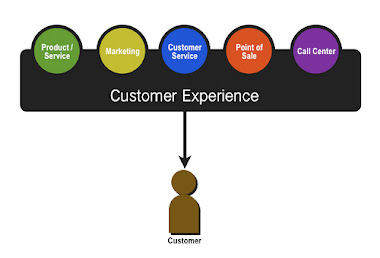
In today’s competitive environment, it’s more important than ever to provide consumers with a positive and memorable experience to separate your business from your competitors. Due to advancements in technology and the way consumers are now interacting with brands, it’s becoming inevitable that they will start to form emotional connections and relationships with the brand or business as a whole and further continue to utilize their goods and services. The question then becomes, how can you improve your customers experience and develop these memorable encounters between the consumer and your brand?
A recent article titled Rebecca Cross: The ‘magical experience’ begins with your people provided a recap of helpful advice to ensure that your consumer relationships are ‘magical’. In this article, Cross reviews the best tips from customer service guru John Formica, also known as the “Ex-Disney Guy”, on customer experience enhancement. Let’s take a deeper look at a few of these recommendations.
  1. Understand your customers’ wants and needs.
  2. In order to develop a relationship with your consumers, you need to have a complete understanding of their wants and needs. Implementing customer feedback programs is a great way to offer consumers an outlet in which they can voice their opinions. If your consumers feel as though their ideas are being heard and applied to your everyday agenda, you will build their confidence in your company. Always remember that your consumers are the ones using your products and services and they know what they need from your business. Building this loyalty will drive customer experience enhancement and yield a more successful outcome.
  3. First impressions and perceptions are critical.
  4. The overall atmosphere of your business will ultimately impact the consumers’ first impression. From the time they set foot in your business, they begin to develop a perception of your brand. Are they greeted when they walk in the door? Where are the service counters? Is signage easy to read? Are products placed in a way that make sense to the consumer? These factors, and many more, play a pivotal role in determining if your customers will decide whether they will return. Consider utilizing customer experience management tools that can provide you with a deeper understanding of how your consumers perceive your brand from the beginning. It may be beneficial for you to hire a mystery shopping provider that is qualified in presenting relevant  information so you can  listen objectively and deliver actionable feedback for further customer experience enhancement.
  5. Pay attention to details and think of yourself as on-stage.
When it comes to customer experience management, all of your employees should be on board. Each individual person plays a key role. Exhibiting a good attitude and applying the right technique are two important attributes that contribute to the customer’s perception. One of the main reasons that consumers do not remain loyal is because of the way they are treated by your team. To further improve the customers’ experience, consider the insight that a performance consulting and training company can deliver.
About The Author
Service Excellence Group, Inc. is a customer experience measurement and solutions provider with a focus on performance management, research and customer intelligence. Service Excellence Group has developed partnerships with clients in an open and collaborative way that is flexible to the changing environment. Thorough research and analysis of your business could lead to customer experience enhancement. If you are interested in services such as mystery shoppers, feedback programs or training to improve your customer experience management, we can help you achieve your goals.

Wednesday, 22 May 2013

life cycle


Telecom
Increased attrition due to slower economic conditions, a highly competitive marketplace, and competition from newer technologies like wireless and voice-over-the-Net services, have all added to the challenges faced by the telecom industry around the world. Heightened competition and overcapacity are pushing down prices for telecom carriers, putting higher pressure on margins and profitability.
To address this multitude of challenges, telecom leaders need to focus on core performance, understand customer segments, and develop sustainable business strategies. Sutherland’s Telecom Solutions offerings are geared toward providing a structured response to many of the profitability challenges faced by telecom players.
Sutherland Solutions
Customer Lifecycle Management
Our customer lifecycle management solutions support the entire lifecycle of customers in the telecom vertical.
Customer Lifecycle Management
Other Solutions
Sutherland also offers risk and survey analytics solutions to augment its lifecycle management of the customer. These solutions enable telecom providers to achieve superior returns on given risk profile of the business.
Revenue Management
  • Recommendations for profitable partnerships and right pricing for accessing competitor network
  • Lost revenue analysis by reconciling multiple data sources

Risk Mitigation
  • Origination Scorecards to assess risk at acquisition
  • Predictive risk modeling

Survey Analytics
Measuring customer satisfaction and understanding needs by
  • Framing survey design
  • Capturing responses
  • Analyzing the responses and providing feedback to business

CRML


What is CRM (customer relationship management)?
CRM (customer relationship management) is an information industry term for methodologies, software, and usually Internet capabilities that help an enterprise manage customer relationships in an organized way. For example, an enterprise might build adatabase about its customers that described relationships in sufficient detail so that management, salespeople, people providing service, and perhaps the customer directly could access information, match customer needs with product plans and offerings, remind customers of service requirements, know what other products a customer had purchased, and so forth.
According to one industry view, CRM consists of:
  • Helping an enterprise to enable its marketing departments to identify and target their best customers, manage marketing campaigns and generate quality leads for the sales team.
  • Assisting the organization to improve telesales, account, and sales management by optimizing information shared by multiple employees, and streamlining existing processes (for example, taking orders using mobile devices)
  • Allowing the formation of individualized relationships with customers, with the aim of improving customer satisfaction and maximizing profits; identifying the most profitable customers and providing them the highest level of service.
  • Providing employees with the information and processes necessary to know their customers, understand and identify customer needs and effectively build relationships between the company, its customer base, and distribution partners.
Many organizations turn to CRM software to help them manage their customer relationships. CRM technology is offered on-premise, on-demand or through Software as a Service

Monday, 20 May 2013


7 Tips for Recovering from a Bad Customer Experie

ReachLocal How To Recover from A Bad Customer Experience


As much as every business would love for each of its customers to have an excellent experience each time they do business with them, in the real world, that’s not always how it works. Even the best brands and businesses have customers who, from time to time, have a less-than-positive experience – for a variety of reasons. So, here are seven tips for how to recover when a customer has a bad experience with your business.


1) Address the Complaint Quickly
Today, a customer may complain at the time of service or wait to make a phone call or email the business. Whenever and however a customer contacts you about a negative customer experience, it’s important to resolve their issue directly and as quickly as possible, for a number of reasons. First, you want the customer to know you care about their business and want them to return, so being quick to resolve their problems helps them feel more positive about your company while they are most concerned about their experience. Also, quickly resolving customer issues is critical in helping keep negative reviews about your company from showing up online. That’s because often, customers turn to review sites, social media outlets, or even blogs to express their frustration about a bad customer experience. So, not only does quickly resolving their issues help make the customer happier – it can also help nip negative reviews in the bud, protecting your online reputation.
2) Identify the Root of their Complaint
When a customer complains about a bad experience, they may mention a variety of issues when they speak with you. They may wander off topic and also share about their overall bad day, or an awful experience with a competitor, or anything else that’s on their mind. But, it’s important to respectfully listen to what they have to say, paying careful attention to the specifics they mention pertaining to your business. Did you miss your appointment window? Were your products or services below the level of quality the customer anticipated? Were they overcharged for their purchase? Did your staff or partners provide poor customer service? There are many potential issues that can arise, but it’s important to identify the root of the problem so you can respond to their specific issue and not just offer a blanket response to any and all complaints.
3) Offer a Resolution Immediately
If a customer is unhappy with your products or services, try to solve their problem and make sure their anger is resolved as soon as you hear about it, before they ever leave your business or, for service companies, before you leave them. The longer it takes for their issue to be resolved, the more upset they are likely to become. To make sure you can consistently offer immediate resolutions to customer complaints, create a system, procedure, or policy for each of the different types of bad customer experiences your business has faced so that you’ll have a go-to way to handle issues as soon as they arise.
4) Take Responsibility for their Experience
Is every customer complaint your fault? Probably not, but it’s important to take responsibility for whatever contribution you have had in the issue. Don’t blame the customer, because that is likely only going to make them more upset. Instead, identify the parts of the issue that your business played a part in, and let the customer know you are aware of your responsibility in the matter. 
5) Offer a Heartfelt Apology
Next, make sure to apologize for the customer’s bad experience. Be sincere and genuine, and stay professional in your response. Let the customer know you appreciate their business and are sorry for any inconvenience caused. Don’t be snarky, frustrated, or terse in your conversation with the customer. Instead, put yourself in their shoes and let them know you care. A heartfelt apology can go a long way in helping ameliorate any animosity the customer may have and in keeping a negative review at bay.
6) Provide a Tangible Resolution 
In most cases, an apology alone, while nice, is not enough to truly recover from a bad customer experience. In order to fully resolve the issue with the customer, it’s usually best to offer a tangible resolution. For example, many businesses offer a discount, refund, or complimentary future product or service package, depending on the severity of the issue. If your business has caused harm to a customer or their property in some way, you may need to seek expert counsel on how to resolve the issue to avoid potential legal action.
7) Empower Your Team to Resolve Bad Experiences
“May I speak with a manager?” This is often one of the telltale questions that a customer has a complaint about your business. But often, the chain of command, authority, and approvals to get customer complaints resolved can make the process take more time and ultimately make the customer feel more frustrated instead of pleased at the outcome. So, to the best of your ability, empower your team to be a part of the complaint resolution process so that issues are handled at the front line instead of having to escalate them up for a true resolution. Of course, some situations are more severe than others, and due to the varying nature of customer complaints, they are ultimately handled on a case-by-case basis. But by getting your entire team trained on how to provide great customer service and finding consistent resolutions you can offer for the most common customer complaints, you can help reduce the number of customer complaints that you or your management has to deal with – and help ensure that your customers are happier as well.

Sunday, 19 May 2013

Stages of CE Lifecycle

Prospective Customers: The First Phase of the Customer Life Cycle

Sales Email
Before your customers are actually your customers, they are simply prospects who may or may not be aware of your product, brand, or company. Your job, as a marketer, is to first make them aware of your product, brand, or company and then peak their interest enough that they will convert to an active customer or user. Once you have their interest peaked, of course, your next job is to provide the trust, security, and incentive that they need to overcome any barriers or obstacles and become a registered or paying user or customer. This phase of the customer life cycle – the process of converting a prospect into a customer or user - is often the most challenging. It involves a marketing acquisition budget as well as an awareness of what will transition prospects from "just interested" into fully engaged. Many marketing books have been written about the techniques and challenges of acquiring new customers. While it is an important part of the mix, email marketing is only a portion of the many marketing activities you'll need to master in order to effectively convert prospects to customers.
Another common term you'll hear used referring to this part of the customer life cycle is "leads."Leads are the names and contact information (typically in the form of an email address) of people who have shown an interest in your product, service, or brand. Often, they have done so by signing up for a special offer or even a piece of free content. Leads may also be purchased from data companies. However, if you are purchasing a lead list, we recommend that you be extremely careful and research that the data you are buying is from a reputable company and won't put you at risk of violating any privacy or CAN-SPAM laws.

New Customers or Users: The Second Phase of the Customer Life Cycle

So, now you've converted a prospective customer or lead into a paying or registered customer. That's great and shows that you have some real marketing skills. However, ideally you want your new customer or user to be a customer or user who has a long term relationship with you, not just one who purchases one time and then never returns. Think of this phase of the customer life cycleas though it's like the early phases of dating. Your new customer has been "sold" enough on you to go out on one date or make one purchase, but they're not sure if you're a long-term commitment yet! It's your job to build a relationship with them so that they continue to return, interact, and purchase from you for a long time to come. Again, the quality of your product or service will certainly matter here, but so will the way in which you communicate with your customer and show them that you respect their privacy, time, and, most importantly, business.

Active Customers or Users: The Third Phase of the Customer Life Cycle

Now you've converted a prospective customer into a paying or registered customer. This is the stage at which you need to not only impress the customer with the quality of your product, but also follow-up with them to build a relationship, make them feel important to you, and ensure that, when they think of you, those active customers think of returning to you. If we're still using the dating analogy, think of this as the time when you make sure that you're always being polite and wearing your best clothing when you communicate with the customer!

Saturday, 18 May 2013

Migrating an application to SaaS (Software as a Service) means rethinking and redesigning the software in several fundamental ways including changing the hosting model from single to multi-tenant, the business model from perpetual license to subscriptions and the update cycle from years to months.
The customer life cycle
But in our experience having designed over 60 SaaS applications, one of the most significant changes is in the management of the customer life cycle. Customer life cycle refers to the full progression of steps a customer goes through when exploring, purchasing, using, getting support and upgrading a product or service. With SaaS you build some or all of these steps directly into the software. This is a dramatic shift in software design but is essential to meet modern user expectations as well as achieve scalability and profitability. Let me detail this out further.
On-premise software customer life cycle (traditional)
With traditional on-premise software, the customer life cycle is handled by many departments and individuals.  There is a large upfront sales effort with a protracted sales cycle, from a large team (pre-sales, account manager, marketing, advertising) that "manages" the buyer through the sales process. A purchase cannot even move forward without engaging with the sales team.  Installation/setup including customization and provisioning requires a systems engineer or consultant. Training and a post-sales support staff manage the usage and on-going maintenance phases. A person in finance handles renewals. At every customer life cycle "touch point", the buyer must engage with a human gatekeeper that is outside of their everyday use of the "core" application  (e.g. the CRM or ERP).
SaaS customer life cycle
With SaaS, the above "high touch" model falls to pieces due to economics and user expectations.  When you migrate to SaaS you still have your core application as the center of focus, but then you systematically identify all of the points in a SaaS application where the software or staff will touch the customer (e.g. early sales, marketing, demos, provisioning, configuration, billing, monitoring, renewals, support etc.). Based on your specific business, customer and technology dimensions, you evaluate which of these touch points can and should be migrated online and be built into the SaaS application.
Put in very broad buckets these touch points address:
  • Purchasing & Deployment
  • Configuration & Provisioning
  • Usage
  • Monitoring & Upsell
Designing for buyer self-service
In a pure SaaS model, the underlying economics mandate that almost all of the touch points in the customer life cycle be designed, delivered and managed via the SaaS application. So in addition to delivering the core application, the software is designed to use automation and self-service do the tasks that would otherwise require support staff to service.  Buyers can do these tasks on their own, right within the software. This is essential to achieve economies of scale, rapid iterations, and broad market appeal. When implemented correctly, the cost of acquiring and supporting 100 customers should be just marginally higher than for 1 customer.
Of course, pure SaaS is not appropriate to all business models. The underlying business value of a piece of software may require unique customer processes, or complex integration tasks that can't be automated. The steps in the SaaS life cycle framework are however still appropriate for developing a roadmap on how to design your SaaS.  Examine the touch points in the life cycle of your own organization and your product to determine the appropriate combination of self-service and high-touch services interacting with one another.
In some cases you may need to offer enhanced customization, additional sales support, or on-site professional services, and the premium you charge for this will cover the cost hit you take by not being able to scale via automation or self-service.  But even in these cases, don't fall back on traditional on-premise software approaches. You should still thoroughly examine all points in the customer life cycle and determine the fundamental cost advantages of addressing each component in software vs. with sales and support staff. This will help you to align your business model with the underlying economics of how the core application and supporting services are exposed to users.
A real world example
We worked with one of the leading SaaS CRM providers on a problem they had with losing more than 20% of the people who initially signed up for the service. Because SaaS makes it possible to track online activities, we were able to determine where users were dropping out. The company had assumed the problem was in their core application, but it was actually in the customer life cycle during the provisioning and customization process (that at this point was still being managed by support staff). Once we knew where to work, we were able to move these touch points into the application to create a smooth and simple user experience to allow self-provisioning and customization.  This very effectively reduced the dropout rate. 
A visual model
The below diagram explains the SaaS customer life cycle visually.

On the left is a traditional on premise solution. This inside area is the part of the software that the customers touch i.e. the core application. Around this on the outside are all of the touch points of the application that are not built into the software. Someone has to come in to sell it. Someone has to come into provision it. Someone has to come in to customize. Someone has to come onsite to do training. Etc.  So there are many touch points that are not part of the design of the software.
On the right is a SaaS application. You still have the core application in the middle that users touch. But there are many points around the core application but still inside the circle (the lifecycle of that product) that users can touch.  This includes things like trial software, purchasing, configuration, provisioning etc. Buyers have an expectation they can do these things on their own without the need to interact with a sales or support person.  Consequently the implementation and user experience needs to be simple, easy and effective.
As an organization you need to understand the life cycle touch points that surrounds your product.  If a touch point is inside the circle it means buyers are going to touch it as part of the software.  If outside the circle it means that aspect will not be built into the software.

Friday, 17 May 2013

CRL


What Is Your Customer Relationship Lifecycle?

For your customers and prospects, your customer relationship lifecycle is the basis for their experiential “journey” with your brand–from awareness of your company or product to selection or purchase, satisfaction, and loyalty. It’s called a lifecycle because it depicts the life of your relationship with your customers. And since the goal of your lifecycle is to engage and deepen the relationship, it is circular in nature with the customer appropriately located in the center.
The better their experience as they progress through it the more customers will move from one stage to the next, driving increased engagement and loyalty. In each stage, you have the opportunity to understand and meet their needs, deepening the relationship along the way. Or, you might unwittingly erect barriers to progress along the way, causing customers to drop out of the relationship–most never to return.
Defined by a series of predictable stages, your lifecycle is a unique experiential "journey" from awareness of your company to, ideally, advocacy for it. Throughout the lifecycle, your brand, marketing, and service delivery touchpoints–digital and otherwise–define customer experience.
Attracting and keeping customers begins with understanding how well your brand and touchpoints work, or don't, at driving movement from one stage to the next. By understanding attitudes, perceptions, and influencers at each stage, you can see where the relationships between you and your customers can be improved.

A multi-stage journey from discovery to engagement, with loyalty the goal.
2013 03 MCorp CRL
While every company has its own unique customer lifecycle, the core framework remains the same. This five-stage model is the basic framework for all lifecycles, though analysis of yours may identify four, six, or seven stages. 
Regardless of your unique lifecycle, the early stages align closely with the traditional sales or marketing funnel, beginning with awareness or discovery. Once a customer has discovered your brand, they need to learn more about it. Does it fit their wants and needs? What alternatives exist? Assuming your customers make it this far, the next step is to choose your brand. This stage includes selection or purchase, and is followed by use.  
Looked at through the sales funnel these steps conclude the acquisition process and–and for many companies–signal a decreased focus on customers. Realistically, this is where the hard work begins. Because the step following choose is use, and this is where most companies need to excel to boost repurchase and retention, and drive towards loyalty.