Friday, 10 May 2013


Consumer Behaviour Trends of Generation Y
Can you afford to ignore over 22% of potential customers?
Industry Canada explains that since much of this demographic still lives at home, most of their income is disposable.  Having money to spend makes this group an incredibly influential consumer demographic.
1) Online Shopping
As the most tech savvy generation, a company’s website is the first place they will go to get location, hours and product information. Therefore it is critical that companies not only have a website, but they have an attractive, well positioned site that will grab the impatient audience. They spend much of the day online, and can quickly judge a company’s image by their website.
2) Online Reviews
- Generation Y is bombarded with a huge number of product choices
- They have grown skeptical of forceful advertising and sales techniques
- They are team oriented and put a high weight on interactions with others
Online reviews allow us to get a consumer’s advice on a product, and not the completely biased sales pitch of the product maker. Understanding the still present ability for manipulation we draw our own conclusions based on this and other information.
3) Personal Recommendations
As with other groups, Generation Y places the highest weight on the recommendations of friends and family. The age old wisdom of providing exceptional service to encourage repeat customers and recommendations is no less valid for this group. Generation Y is incredibly team oriented, and will save you thousands on follow up advertising through their social media streams if you win their business.
4) Daily Deal websites and specials.
- The networking of the internet allows consumers to arrange into powerful bargaining units.
- The amount of choice in the marketplace encourages businesses to strongly compete for market share
- The economic downturn spurred innovation to find ways of getting lower prices.
Using the networking power of the internet, and the well known tactic of collective bargaining Daily deal sites were created to provide discerning consumers with lower prices.  The website promises a business to promote, and get high sales for one special offer if that business drastically cuts its prices. Consumers get an extremely low price, and the business gets a huge number of orders offsetting the lower price per customer.
This is an incredibly effective marketing tool for businesses that provides a huge influx of customers and effective exposure.  Many customers do not develop lasting connections with these businesses, which is why Ask Geny provides innovative sustainable solutions.

The Challenges of Customer Experience


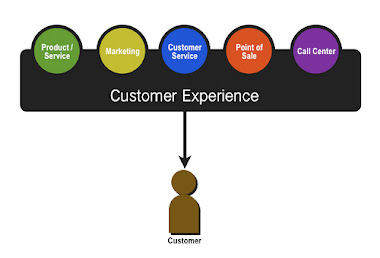
Most successful companies would say that they try to create a good customer experience and have invested in the systems, people, and training to develop it. So what’s missing? Why is it so much more difficult to meet customer expectations every day in every way?
  • Customers want to do business with companies in more ways than before – social, digital, direct, in-store, mobile, and call center
  • The customer buying and owning lifecycle has become more complex
  • Siloed channels and systems create customer frustration

Thursday, 9 May 2013

CR Lifecycle


What Is Your Customer Relationship Lifecycle?

For your customers and prospects, your customer relationship lifecycle is the basis for their experiential “journey” with your brand–from awareness of your company or product to selection or purchase, satisfaction, and loyalty. It’s called a lifecycle because it depicts the life of your relationship with your customers. And since the goal of your lifecycle is to engage and deepen the relationship, it is circular in nature with the customer appropriately located in the center.
The better their experience as they progress through it the more customers will move from one stage to the next, driving increased engagement and loyalty. In each stage, you have the opportunity to understand and meet their needs, deepening the relationship along the way. Or, you might unwittingly erect barriers to progress along the way, causing customers to drop out of the relationship–most never to return.
Defined by a series of predictable stages, your lifecycle is a unique experiential "journey" from awareness of your company to, ideally, advocacy for it. Throughout the lifecycle, your brand, marketing, and service delivery touchpoints–digital and otherwise–define customer experience.
Attracting and keeping customers begins with understanding how well your brand and touchpoints work, or don't, at driving movement from one stage to the next. By understanding attitudes, perceptions, and influencers at each stage, you can see where the relationships between you and your customers can be improved.

A multi-stage journey from discovery to engagement, with loyalty the goal.
2013 03 MCorp CRL
While every company has its own unique customer lifecycle, the core framework remains the same. This five-stage model is the basic framework for all lifecycles, though analysis of yours may identify four, six, or seven stages. 
Regardless of your unique lifecycle, the early stages align closely with the traditional sales or marketing funnel, beginning with awareness or discovery. Once a customer has discovered your brand, they need to learn more about it. Does it fit their wants and needs? What alternatives exist? Assuming your customers make it this far, the next step is to choose your brand. This stage includes selection or purchase, and is followed by use.  
Looked at through the sales funnel these steps conclude the acquisition process and–and for many companies–signal a decreased focus on customers. Realistically, this is where the hard work begins. Because the step following choose is use, and this is where most companies need to excel to boost repurchase and retention, and drive towards loyalty.

Wednesday, 8 May 2013

What is a Customer Life Cycle?

A customer life cycle can also be thought of as the length, arc and nature of a customer's relationship with your brand or company. Much like a "human life cycle" or a relationship between two people, this customer life cycle is marked by ups and downs, different phases and different periods of activity. Also like a human life cycle or a relationship between two people, you want your customer's life cycle to be as long and as fruitful as possible. How do you accomplish that? While the quality and value of your company and brand goes a long way to building long customer life cycles, not unlike in real life communication plays a key role as well. Because you won't experience real-life, real-time, one-on-one communication with the majority of your customers very frequently (if at all), your corporate communications, particularly your email communications, can fulfill the relationship building need here.
In this section, we'll talk you through various phases in the customer life cycle. In the sections following, we'll discuss how to integrate email marketing efforts into the various points in the customer life cycle.

Prospective Customers: The First Phase of the Customer Life Cycle

Sales Email
Before your customers are actually your customers, they are simply prospects who may or may not be aware of your product, brand, or company. Your job, as a marketer, is to first make them aware of your product, brand, or company and then peak their interest enough that they will convert to an active customer or user. Once you have their interest peaked, of course, your next job is to provide the trust, security, and incentive that they need to overcome any barriers or obstacles and become a registered or paying user or customer. This phase of the customer life cycle – the process of converting a prospect into a customer or user - is often the most challenging. It involves a marketing acquisition budget as well as an awareness of what will transition prospects from "just interested" into fully engaged. Many marketing books have been written about the techniques and challenges of acquiring new customers. While it is an important part of the mix, email marketing is only a portion of the many marketing activities you'll need to master in order to effectively convert prospects to customers.
Another common term you'll hear used referring to this part of the customer life cycle is "leads."Leads are the names and contact information (typically in the form of an email address) of people who have shown an interest in your product, service, or brand. Often, they have done so by signing up for a special offer or even a piece of free content. Leads may also be purchased from data companies. However, if you are purchasing a lead list, we recommend that you be extremely careful and research that the data you are buying is from a reputable company and won't put you at risk of violating any privacy or CAN-SPAM laws.

New Customers or Users: The Second Phase of the Customer Life Cycle

So, now you've converted a prospective customer or lead into a paying or registered customer. That's great and shows that you have some real marketing skills. However, ideally you want your new customer or user to be a customer or user who has a long term relationship with you, not just one who purchases one time and then never returns. Think of this phase of the customer life cycleas though it's like the early phases of dating. Your new customer has been "sold" enough on you to go out on one date or make one purchase, but they're not sure if you're a long-term commitment yet! It's your job to build a relationship with them so that they continue to return, interact, and purchase from you for a long time to come. Again, the quality of your product or service will certainly matter here, but so will the way in which you communicate with your customer and show them that you respect their privacy, time, and, most importantly, business.

Active Customers or Users: The Third Phase of the Customer Life Cycle

Now you've converted a prospective customer into a paying or registered customer. This is the stage at which you need to not only impress the customer with the quality of your product, but also follow-up with them to build a relationship, make them feel important to you, and ensure that, when they think of you, those active customers think of returning to you. If we're still using the dating analogy, think of this as the time when you make sure that you're always being polite and wearing your best clothing when you communicate with the customer!

Repeat or Loyal Customers or Users: The Fourth Phase of the Customer Life Cycle

If you've managed to get a customer over the first two hurdles, converting them from a prospective customer or lead to an active customer and then from an active customer to a repeat customer, you should be congratulated! Earning loyal customers who will make repeat purchases or visits to your website or service is quite a marketing accomplishment. Once your customers become repeat customers, the aggressiveness and frequency with which you want to communicate with them will diminish, but it certainly won't disappear. You'll want to make sure that customers are being reminded that they are important to you, as well as being given reasons and incentives to remain loyal. There's always a competitor out there ready to move in on your user or customer base. Your best tool to retain customers who have become repeat or loyal customers is to keep an ongoing dialogue with them through all of your marketing communications channels, including email.

Lapsed Customers or Users: The Fifth Phase of the Customer Life Cycle

Unfortunately, even a loyal or repeat customer may eventually lose interest or contact. When a customer has gone a significant amount of time without interacting with your brand or company or purchasing a product, they are referred to as a "lapsed" customer. In most cases, you will break your lapsed customers down into two to three groups. It's common to consider short-term lapsed, long-term lapsed and "seasonally lapsed" customers differently. However, how you define what those groups are (and perhaps how you develop your own segmentation for lapsed customers) will depend greatly on your product, industry segment, or customer base. If, for example, you sell shoes, a customer who didn't purchase from you once a quarter would easily be considered lapsed as shoes are a constant and ongoing need. If, however, you only sell snow boots, you wouldn't expect customers to purchase from you over the summer, so the time between purchases to define a lapsed customer and the point in the year when you would want to contact lapsed customers would be different. Essentially, a lapsed customer is a customer who has not made a repeat purchase within a time frame that you have defined as the time between which active customers typically make purchases.

Inactive or Abandoned Customers or Users: The Sixth Phase of the Customer Life Cycle

Of course, some lapsed customers may eventually turn into inactive or abandoned customers who no longer purchase or interact with your company. Some of these inactive customers will have reasons for no longer having a relationship with your company that you cannot control, such as a bad experience with customer service or a change in their financial situation. However, many inactive customers may simply have forgotten about you, been lured away by competition, or simply need an incentive to re-purchase for you. Customers in this phase of the customer life cycle should be divided into two groups – customers who should not be communicated with at all any more and customers that you hope to win back via a customer communication or marketing campaign.
Of course, within this customer life cycle, different customers will have different values (some will spend more and be worth more to acquire, retain or win-back). However, no matter how big or small the value of the customer, their customer life cycle and relationship with your company, product, or brand will most likely follow the cycle or path outlined above. Fortunately, if you know the likely life cycle or pattern of a customer, you can make changes to your customer communications or marketing strategy to try to optimize the length of time and the value that a customer brings to your business.
No matter what email marketing or bulk email strategy you are taking, the first step to ensure a successful email campaign is to choose a reliable bulk email sender. Comm100 , who provides this comprehensive ebook on email marketing best practices, offers you powerful email marketing software, which is both a great long-term and short-term solution to improving your email marketing program to a new level.
About Comm100
Comm100 provides enterprise-level customer communication tools including live chat, ticket, forum and knowledge base. Live chat for website is one of our main products. It offers multiple chat apps and plugins, like live chat for android, live chat for iphone, live chat for joomla and wordpress chat plugin.

Customer Relationship Lifecycle


Customer Relationship Lifecycle

In customer relationship management (CRM), customer life cycle is a term used to describe the progression of steps a customer goes through when considering, purchasing, using, and maintaining loyalty to a product or service. Marketing analysts Jim Sterne and Matt Cutler have developed a matrix that breaks the customer life cycle into five distinct steps: reach, acquisition, conversion, retention, and loyalty. In layman's terms, this means getting a potential customer's attention, teaching them what you have to offer, turning them into a paying customer, and then keeping them as a loyal customer whose satisfaction with the product or service urges other customers to join the cycle. The customer life cycle is often depicted by an ellipse, representing the fact that customer retention truly is a cycle and the goal of effective CRM is to get the customer to move through the cycle again and again.

Tuesday, 7 May 2013

A Taste of Gen Y as They Enter Adulthood


“Gen Y has been the most studied generation ever,” observed Melissa Lavigne-Delville, NBCUniversal Integrated Media’s VP of trends and strategic insights. She spoke on Tuesday in New York about Gen Y related trends and new ways that this group has been experimenting with options to handle their work, family and social lives.
The occasion was the screening of a film called y Now, produced by NBCUniversal Integrated Media’s Curve Films. The short documentary portrays nine members of Gen Y as they transition into adulthood. The film, which is mainly being used for research purposes, was created to complement The Curve, their extensive report on the same topic.

Below are a few takeaways that cover both conventional wisdom about Gen Y’s mindset and more recent trends.
Growing influence. Gen Y includes 76 million people in the U.S. who were born between 1978 and 1995. Now they comprise the majority of those in advertisers’ coveted age range of 18 to 49. Given Gen Y’s large numbers and high degree of social media connectivity, they wield increasing influence on brands.
Optimistic perspective. “They grew up in a relatively positive political and economic environment, doted on by their parents,” Lavigne-Delville noted. “As a result, they have a more optimistic outlook on the recession than Gen X.”
New lifestage between adolescence and adulthood. “Gen Y has had an extended adolescence, or a soft launch into adulthood,” Lavigne-Delville commented. “Due to the recession, they have been ‘lifestalling,’ or sitting it out and reassessing their options. In fact, for many in Gen Y, they consider adulthood to start in their twenties. Also, there’s no agreement regarding what constitutes major adulthood milestones.”
Hooked on but overwhelmed by social media. For Gen Y, social media poses a challenge. Having an online presence is mandatory, since “for Gen Y, if they don’t have an online profile, they don’t exist as a person,” Lavigne-Delville reported. “However, Gen Y is overwhelmed with choices in the real-time web and is not sure which direction to go.”
Autonomous mindset. “With the decline of the nuclear household, many in Gen Y who are not still living with their parents are living alone. They have developed ad hoc support systems,” Lavigne-Delville explained. Although they may have hundreds of Facebook friends, the number dwindles to a few if they need to call them in the middle of the night. “Now they want tighter friendship circles,” she added.
Friends are a matter of taste. Lavigne-Delville referred to the growth of “the taste graph, where you associate yourself with others who have similar tastes regardless of whether they are your Facebook friends. Ambient social networks, that alert you to similar people around you, presented at this year’s SxSW conference.” Lavigne-Delville said these options will gain traction, likely across generations.

Customer Experience Professionals Association

The Customer Experience Professionals Association (CXPA) is a global non-profit organization dedicated to the advancement of customer experience management practices. Our members are individuals who develop, manage, optimize, and envision how organizations interact with their customers. This community includes customer experience practitioners within companies, vendors who support customer experience efforts, and other stakeholders in the industry. CXPA supports the professional development of its members and advances the field by providing research and education, developing standards, offering networking opportunities, promoting the industry, and creating a better understanding of the discipline of customer experience.